

Reguladores de Presión Swagelok® Pilotados
Los reguladores pilotados reductores de presión para Industria General (Serie SGRD) y de Alta Sensibilidad (Serie SHRD) son idóneos para una amplia variedad de aplicaciones industriales en las que se requiere una operación manual o remota del regulador y un control preciso de la presión de consigna.
Obtenga Ayuda para Seleccionar Reguladores de ProcesoLos reguladores series SGRD y SHRD están diseñados para una larga vida útil en entornos exigentes. Los cuerpos están fabricados en acero inoxidable 316L, lo que aumenta la resistencia a la corrosión y la longevidad. Estos reguladores incorporan juntas internas disponibles en varios materiales, lo que ofrece una mejor compatibilidad con un amplio rango de productos químicos y condiciones de presión.
Los reguladores reductores de presión pilotados ofrecen un rendimiento superior en el control de presiones de salida estables. Gracias al uso de una cámara de presión en lugar de un muelle de consigna para el control, estos reguladores minimizan eficazmente el droop. Este diseño asegura la consistencia de las presiones de salida, independientemente de las fluctuaciones de la presión de entrada o de las variaciones del caudal.
Las Series SGRD y SHRD Incorporan
- Obturador equilibrado
- Sensor de diafragma
- Ausencia de venteo
- Control mediante regulador piloto
Características Personalizadas
- Retroalimentación externa al piloto
- Regulador piloto de presión diferencial (Serie SGRD)
- Regulador piloto de dos etapas (Serie SGRD
- Mando del piloto ajustado en fábrica / Antisabotaje
- NACE MR0175/ISO 15156
Conozca los Tipos de Reguladores
Reguladores Reductores de Presión Pilotados para la Industria General (Serie SGRD)
Especificaciones
| Tamaño del Cuerpo | Máxima Presión de Entrada bar (psig) | Máxima Presión de Salida bar (psig) | Rango de Presión Ajustable bar (psig) | Tipo de Mecanismo Sensor bar (psig) | Rango de temperatura °C °(F) | Coeficiente de Caudal (Cv) | Peso Máximo kg (lb) |
|---|---|---|---|---|---|---|---|
| 12 | 413 (6000) | 413 (6000) | 0,3 a 413 (5 a 6000) | Diafragma: 0,3 a 413 (5 a 6000) | –45 a 180° (–49 a 356°) | 2,3 | 4,4 (9,7) |
| 16 | 4,8 | 12,0 (26,5) | |||||
| 24 | 10,7 | 12,5 (27,6) |
Reguladores Reductores de Presión Pilotados de Alta Sensibilidad (Serie SHRD)
Especificaciones
| Tamaño del Cuerpo | Máxima Presión de Entrada bar (psig) | Máxima Presión de Salida bar (psig) | Rango de Presión Ajustable bar (psig) | Tipo de Mecanismo Sensor bar (psig) | Rango de temperatura °C °(F) | Coeficiente de Caudal (Cv) | Peso Máximo kg (lb) |
|---|---|---|---|---|---|---|---|
| 12 | 17,2 (250) | 17,2 (250) | 0,07 a 17,2 (1 a 250) | Diafragma: 0,07 a 17,2 (1 a 250) | –45 a 180° (–49 a 356°) | 2,3 | 4,4 (9,7) |
| 16 | 4,8 | 12,0 (26,5) | |||||
| 24 | 10,7 | 12,5 (27,6) |
Catálogo de Reguladores Reductores de Presión de Proceso Pilotados
Encuentre información detallada de producto, incluidos materiales de construcción, valores nominales de presión y temperatura, opciones y accesorios.
Swagelok RHPS series deliver precise pressure control in process fluid systems up to 4 in. (101 mm) in a variety of spring-, dome-, and air-loaded pressure regulators.
Un regulador de presión tiene un mecanismo sensor (de pistón o diafragma) que, por un lado está sujeto a una fuerza de carga (FS) creada por un muelle (ver más abajo) o por presión de gas. Por el otro lado, el elemento sensor está sujeto a la fuerza (F) del fluido del sistema.

¿Necesita Ayuda para Seleccionar los Reguladores Adecuados?
Compare el rendimiento de los diferentes reguladores bajo diferentes condiciones de aplicación con nuestro generador de curvas de caudal para reguladores.
Encuentre Su ReguladorRecursos Swagelok Elaborados para Vd.
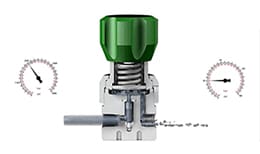
レギュレーターの供給圧力影響(SPE)に対処する
レギュレーター内部における一次側圧力の変化と二次側圧力の変化は、供給圧力影響(SPE)または依存性による反比例の関係にあります。今回は、圧力レギュレーターで発生する供給圧力影響(SPE)による現象への対処方法を紹介します。
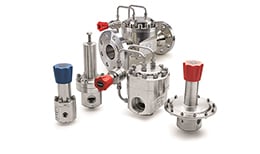
全面的测试如何确保可靠的调压阀性能
您是否想知道设计用于在极端条件下运行的产品需要接受哪些测试?跟随用于零度以下环境的RHPS系列工业调压阀的开发之旅,让我们来看看实验室的情况。
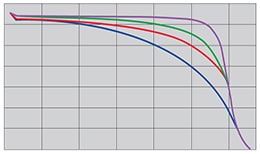
如何使调压阀流量曲线更平稳以减少压力衰减
压力衰减是每个减压阀都难以避免的问题。了解如何利用各种圆顶加载调压阀配置,尽可能地减少压力衰减并使调压阀流量曲线更平直。
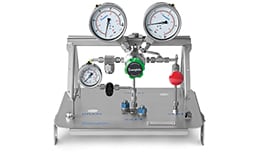
如何使用调压阀来降低分析仪器系统中的延时
在分析系统中,延时常常被低估或误解。降低这种延时的一种方法是使用压力控制调压阀。了解如何通过这些技巧来管理分析系统的延时。